When Is Renal Replacement Therapy Needed for Kidney Failure?
Updated: Sep 14
The kidneys have the important role of keeping the body healthy. They remove waste products and excess fluid from the blood, help maintain the proper balance of minerals, and support healthy blood pressure and red blood cell production. Kidneys do these functions correctly . When kidneys are badly damaged , kidney failure may occur .
Doctors may recommend renal replacement therapy (RRT) for advanced kidney failure. It is a group of treatments that helps out with some of the important jobs that the kidneys usually do. Renal replacement therapy may include hemodialysis, peritoneal dialysis or kidney transplantation depending on the condition of the patient.
But when do you really need therapy? This depends on kidney function, symptoms, blood test results, fluid levels, and the person's overall health.
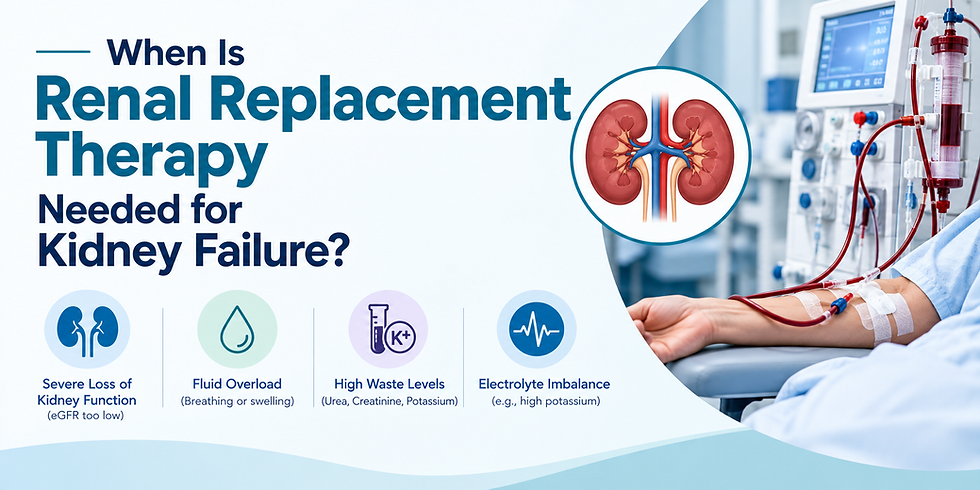
What Is Renal Replacement Therapy?
Renal replacement therapy is a treatment when kidney function falls to a very low level. Healthy kidneys filter waste from the blood, balance fluids and electrolytes, regulate acid, and support several major body functions.
Some of this work can be taken over by RRT if the kidneys can no longer do these functions well.
The main types of kidney replacement therapy are:
Hemodialysis
Blood is run through a machine that filters it.
Peritoneal dialysis
Uses the lining of the abdomen (peritoneum) to filter waste from the blood and remove excess fluid.
Kidney transplantation
A healthy kidney from a donor takes over the function of the failed kidneys.
Indications for renal replacement therapy in kidney failure patients
If kidney failure complications cannot be controlled with medications, diet, and other supportive therapies, RRT may be recommended.
There is no one creatinine level or eGFR value that automatically requires dialysis. Doctors take into account the patient's symptoms, kidney function, fluid balance, blood tests, general health and response to treatment.
Indications for consideration of RRT include:
1. Serious Fluid Overload
If your kidneys aren’t working properly, they may not be able to get rid of enough fluid from the body. This can cause swelling in the legs, face or abdomen and fluid to build up in the lungs.
If there is severe fluid overload that causes breathing problems and does not improve with appropriate medical treatment, dialysis may be needed to remove excess fluid.
2. High Potassium Levels
But normally, the kidneys flush out excess potassium in the urine. Severe kidney failure can cause potassium levels in the blood to rise .
High levels of potassium can affect the heart and can be life-threatening. Dialysis may be needed if emergency medical treatment doesn't bring potassium down to a safe level.
3. Severe Metabolic Acidosis
When the kidneys stop working properly, acids can build up in the blood. This is known as metabolic acidosis. Mild cases can be treated with medicines and treatment of the underlying cause.
However, severe or persistent acidosis resistant to medical treatment may be an indication for renal replacement therapy.
4. Symptoms of Uremia
When the kidneys are not working well, waste products can accumulate in the blood. The condition is known as uremia.
Symptoms can include:
Nausea, vomiting.
Lack of appetite
Extreme fatigue
Confusion or trouble concentrating
Muscular weakness
Altered mental status
Urgent dialysis might be needed for severe complications like uremic encephalopathy or inflammation around the heart.
5. Some poisonings or overdoses of drugs
In some poisonings or overdoses of drugs, dialysis may be used selectively to remove certain compounds from the blood. How useful dialysis is depends on what the substance is, how much of it there is, how well the kidneys are working and how the patient is.
6. Advanced CKD
People with advanced chronic kidney disease may require long-term renal replacement therapy when kidney function is insufficient to maintain normal body functions.
“Doctors typically plan for dialysis before it becomes an emergency. This provides time to discuss treatment options, arrange for vascular access for hemodialysis when indicated, or consider peritoneal dialysis and kidney transplantation.
Is dialysis only initiated when the eGFR is very low?
Not all the time. eGFR is a key measure of kidney function, but it is not the only factor used to determine when to start dialysis.
Some people with very low eGFR may not need dialysis right away if they are having mild symptoms and laboratory tests are stable. Some require RRT for complications such as uncontrolled fluid overload, severe hyperkalemia, acidosis or uremic symptoms.
The decision must be individualized and not based on one number from a blood test.
What are the signs that kidney failure needs urgent treatment?
If a person has a serious kidney disease, get medical help right away if he or she has:
Shortness of breath or sudden increase in breathlessness
Swelling
Urine scanty or absent
Persistent vomiting
Confusion or unusual sleepiness
Heart pain
Weak very
Irregular heart beat or palpitations
Signs of serious electrolyte abnormality or high potassium
These symptoms may suggest serious complications and must be evaluated by a medical professional immediately.
What happens before starting renal replacement therapy?
The patient is evaluated by a nephrologist prior to RRT. The assessment might include:
Blood tests for creatinine, urea, potassium, sodium and bicarbonate
Renal function assessment
Urinalysis
Blood Pressure tracking
Assessment of fluid balance
Review of symptoms and of medication
Assessment of other medical problems
The nephrologist then discusses available treatment options and their benefits, risks and practical requirements.
What is the “best” form of renal replacement therapy?
There is no one RRT choice that is best for all.
For patients needing regular blood filtration through a dialysis machine, hemodialysis may be an option.
Peritoneal dialysis filters waste using the body’s natural lining of the abdomen. It’s done on a schedule, and some patients are able to do it at home.
Kidney transplantation can provide long-term replacement of kidney function in suitable candidates. But transplantation calls for careful evaluation and lifelong follow-up and medications after transplantation.
Decision depends on kidney function, age, other health problems, lifestyle, medical suitability, donor availability and patient preference.
Can Kidney Failure Be Managed Without Dialysis?
In some patients, doctors may choose to manage the kidneys conservatively, in particular in patients with advanced chronic kidney disease who do not have indications for dialysis. This approach emphasizes symptom control, management of complications, quality of life, and treatment of conditions that can worsen kidney function.
However, if complications due to kidney failure cannot be safely controlled with medical treatment, then RRT may be needed.
What can early nephrology care achieve?
Regular nephrology care can identify declining kidney function and manage complications before they become severe. Many patients with chronic kidney disease can slow its progression by controlling blood pressure, controlling diabetes, using medications properly, following dietary recommendations, and monitoring kidney function.
If you have kidney disease, do not wait for serious symptoms to appear before you see a specialist.
Why Sarvesh Health City for Kidney Care in Hisar?
Sarvesh Health City provides specialized nephrology care for patients suffering from kidney disease, kidney failure and related complications. The nephrology team can assess kidney function, monitor disease progression, manage complications and advise patients on dialysis and other renal replacement therapies as required.
Getting a patient evaluated by a specialist in a timely manner is very important for patients who are in the search of the Best Nephrology Hospital in Hisar as kidney function is declining or symptoms of kidney failure are appearing.
Conclusion
Conclusion: When kidneys that are no longer functioning safely cannot maintain the body's fluid, electrolyte, acid-base, and waste balance, renal replacement therapy is needed. The decision of when to start dialysis should not be made on eGFR alone and a timely and appropriate evaluation by a nephrologist is critical to choosing the right treatment at the right time.
Comments